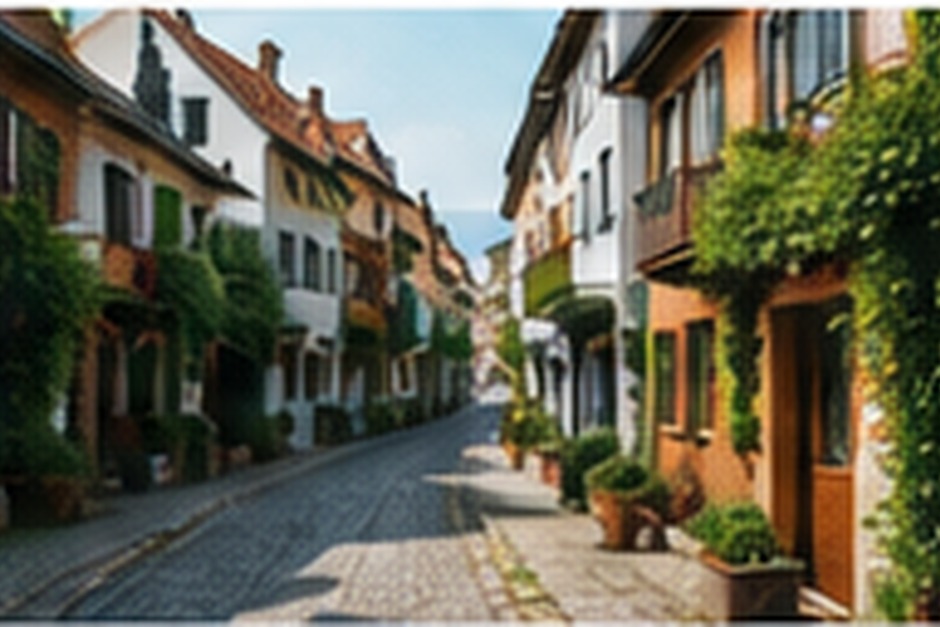
Old streets are naturally photogenic, but they are also easy to reduce to a checklist of colourful doors, cobbles and façades. The most interesting photographs usually come after the obvious picture has already been taken. Staying a little longer allows the street to reveal how people actually move through it and how light changes its surfaces.
A camera can be a reason to pay attention rather than a reason to hurry. Instead of searching constantly for the next composition, choose a short section of street and work within it. Architecture, signs, windows, plants and passing figures begin to relate to one another when you stop treating them as isolated subjects.
Begin with the structure of the street
Look for the lines that guide the eye: roof edges, paving patterns, rows of windows, balconies or the curve of a lane. These elements create a framework before any person enters the scene. Photographing that structure first helps you understand where the strongest viewpoints are.
Try both a wide view and a tighter one. A broad frame explains the place, while a closer image can focus on materials such as worn stone, painted shutters or reflections in old glass. The two approaches tell different parts of the same story.
Wait for ordinary life
A street often becomes more interesting when someone crosses it, a bicycle passes, a shop opens or a curtain moves in an upstairs window. These moments do not need to be dramatic. They provide scale and make architecture feel inhabited.
If you find a promising composition, wait a few minutes rather than walking away. People will enter and leave the frame naturally. This is often easier and more respectful than following strangers in search of a picture.
Use changing light rather than fighting it
Narrow streets create strong contrasts. One side may be in direct sun while the other remains cool and shaded. Instead of trying to eliminate the contrast, use it to simplify the frame. A bright doorway against a dark wall or a figure crossing a strip of sunlight can become the central element.
Overcast weather has its own advantages. Details in brick, plaster and stone remain visible without harsh shadows, and colours often appear richer. Rain can add reflections and quieter streets, giving familiar architecture a different mood.
Photograph details after the wide view
Once you have recorded the overall scene, look for smaller evidence of daily life: door knockers, handwritten notices, worn steps, café chairs, plants on windowsills or patched sections of wall. These details prevent a set of photographs from feeling like a collection of postcards.
It can also help to put the camera down for a while. Walk the same block without photographing anything and notice what attracts your attention naturally. When you pick the camera up again, your choices are often more deliberate.
The best street photographs rarely come from covering the greatest distance. They come from giving one place enough time to become specific. A quiet lane that seemed simple at first may contain several layers of architecture, routine and light — all visible once you stop rushing through it.