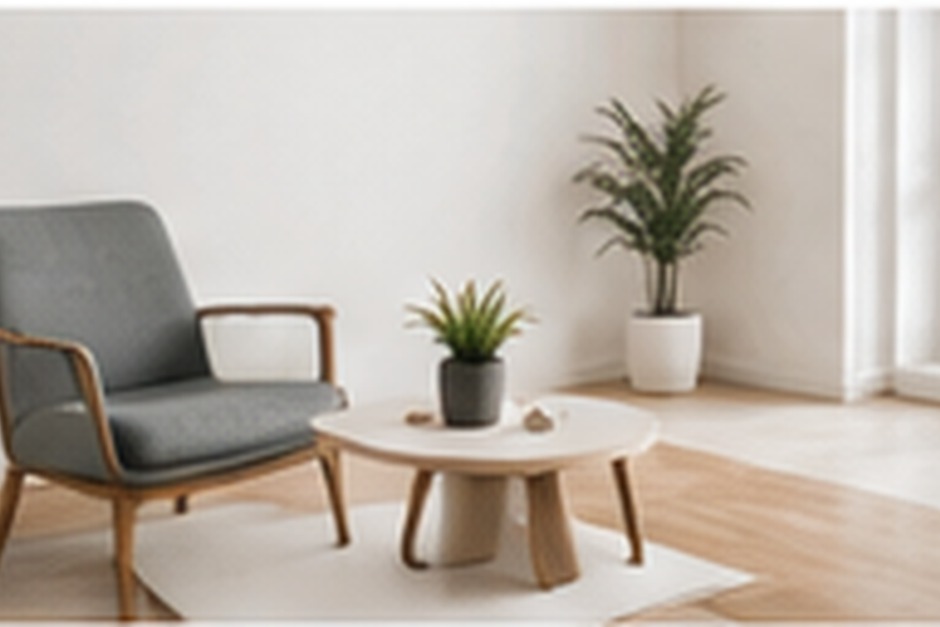
A reading corner works best when it feels slightly separate from the rest of the room, even if it occupies only a metre or two. That sense of separation does not require a screen or renovation. It can come from the position of a chair, the direction of a lamp, a small table and the simple habit of keeping the area clear.
The goal is not to build a decorative display around books. It is to make reading physically easy. When a seat is comfortable, light falls in the right place and there is somewhere to put a mug or notebook, the corner begins to support the activity naturally.
Start with the chair
The best chair is not necessarily the largest or most dramatic one. It should support a position you can maintain without constantly adjusting. Some readers like a deep armchair; others prefer a firmer seat with a footstool. If space is limited, a compact chair placed at a slight angle can define the corner without blocking circulation.
Try the chair in several positions before deciding. Facing directly into a room can feel exposed, while turning it toward a window or bookshelf often creates a more enclosed atmosphere. Even a small change in angle can make the spot feel intentional.
Use two kinds of light
Daylight is ideal, but it changes quickly and is not always available when you want to read. A nearby floor or table lamp should illuminate the page without shining directly into your eyes. Warm ambient light elsewhere in the room can soften the contrast and keep the corner comfortable in the evening.
It is useful to think about where shadows fall when you hold a book. A lamp placed behind the reading shoulder often works better than one positioned directly overhead. For digital reading, lower brightness and indirect surrounding light can make the whole area feel calmer.
Give small objects a home
A side table keeps the corner from becoming cluttered. It only needs enough surface for a drink, reading glasses and perhaps one current book. A shallow basket can hold a blanket or a few magazines, while a narrow shelf keeps frequently used titles within reach.
Resist filling every surface. Visual quiet is part of what makes the corner feel different from the rest of the room. One plant, a framed print or a small ceramic object can add character without turning the area into another place that needs constant arranging.
Let books stay visible
Bookshelves naturally signal the purpose of the space, but they do not have to surround the chair. A low shelf, a small stack on a side table or a single wall-mounted ledge is enough. Keeping the next few books visible can also make it easier to choose what to read rather than reaching for a phone by default.
A reading corner becomes personal slowly. It changes as books accumulate, as a better lamp replaces an old one, or as a favourite blanket finds its place. That gradual evolution is part of its charm. The corner does not need to look finished on the first day.
Most importantly, it should be easy to use. If sitting down requires moving cushions, clearing a table or hunting for a lamp switch, the space becomes decorative rather than functional. A successful reading corner is simply one that invites you to sit down and stay for another chapter.